The Post-war Dream
INNER MONGOLIA, CHINA — 2016 / LONG-TERM PHOTOGRAPHY RESEARCH PROJECT
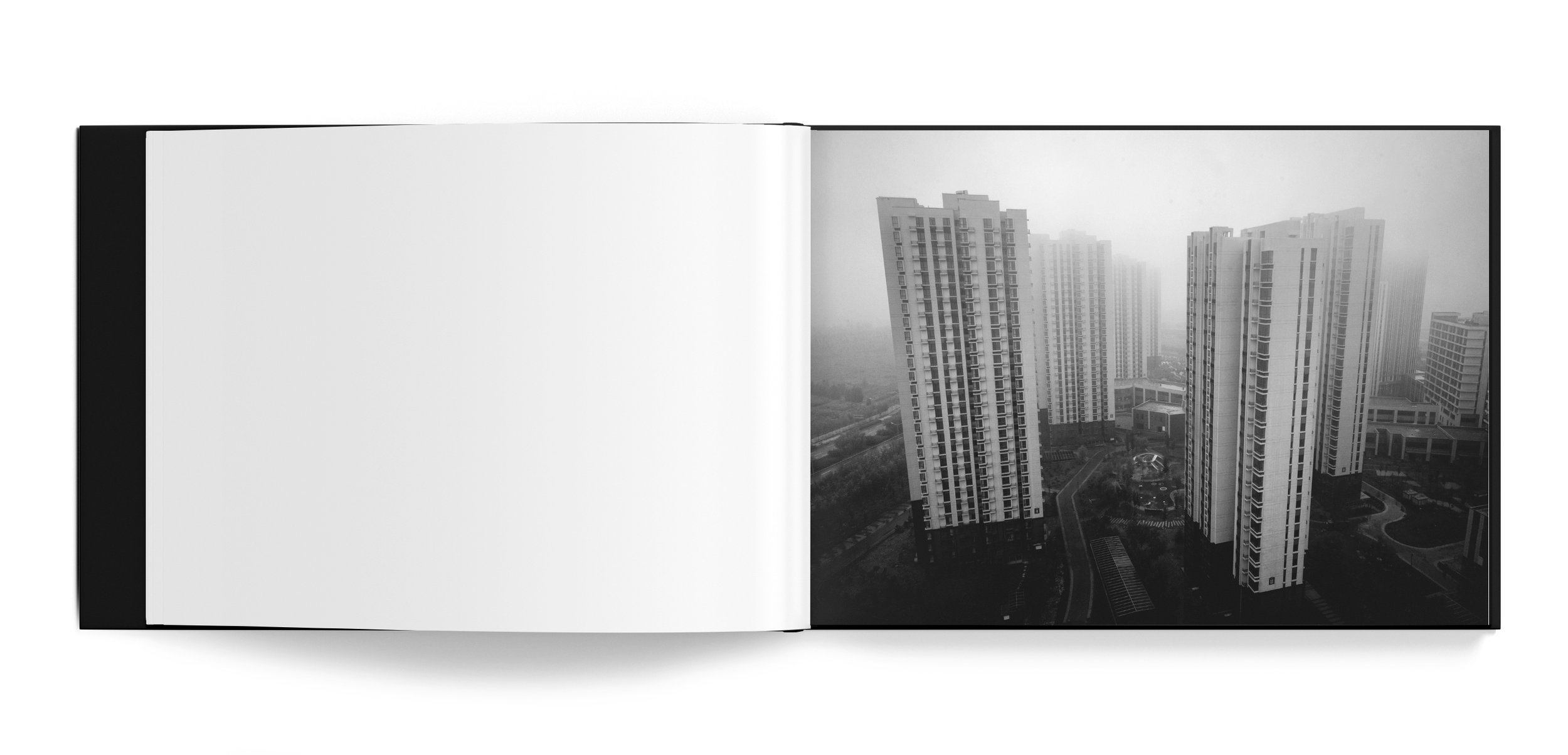
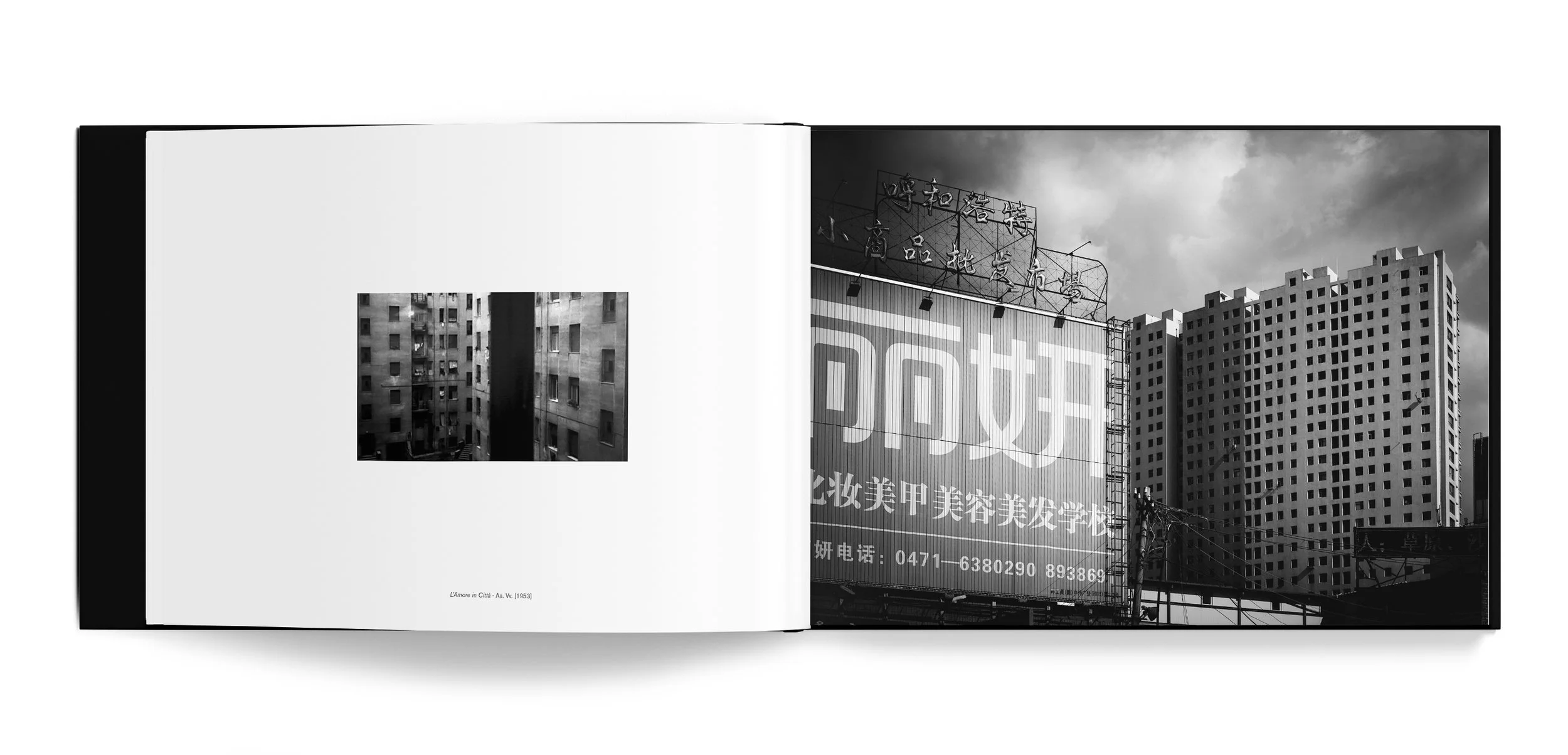
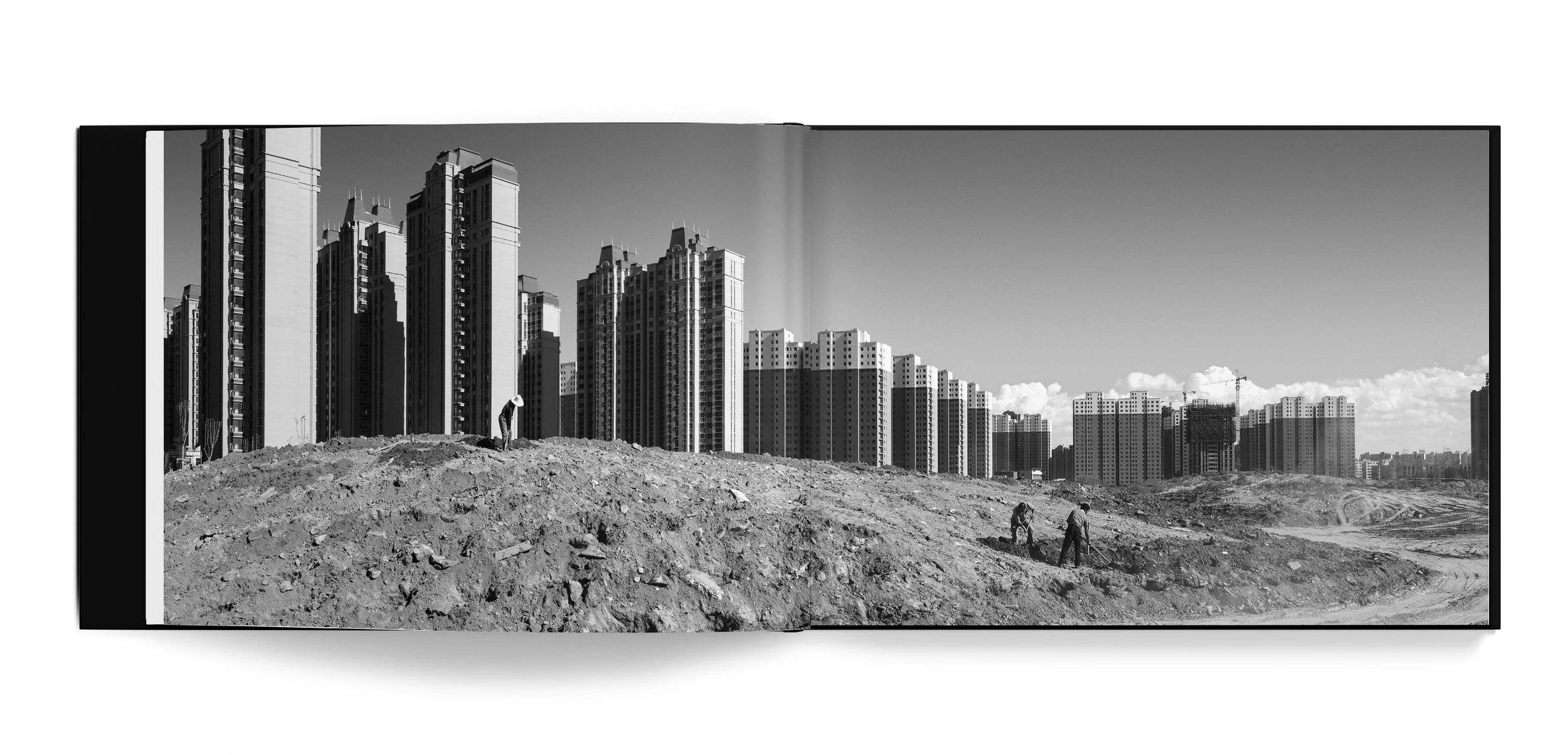
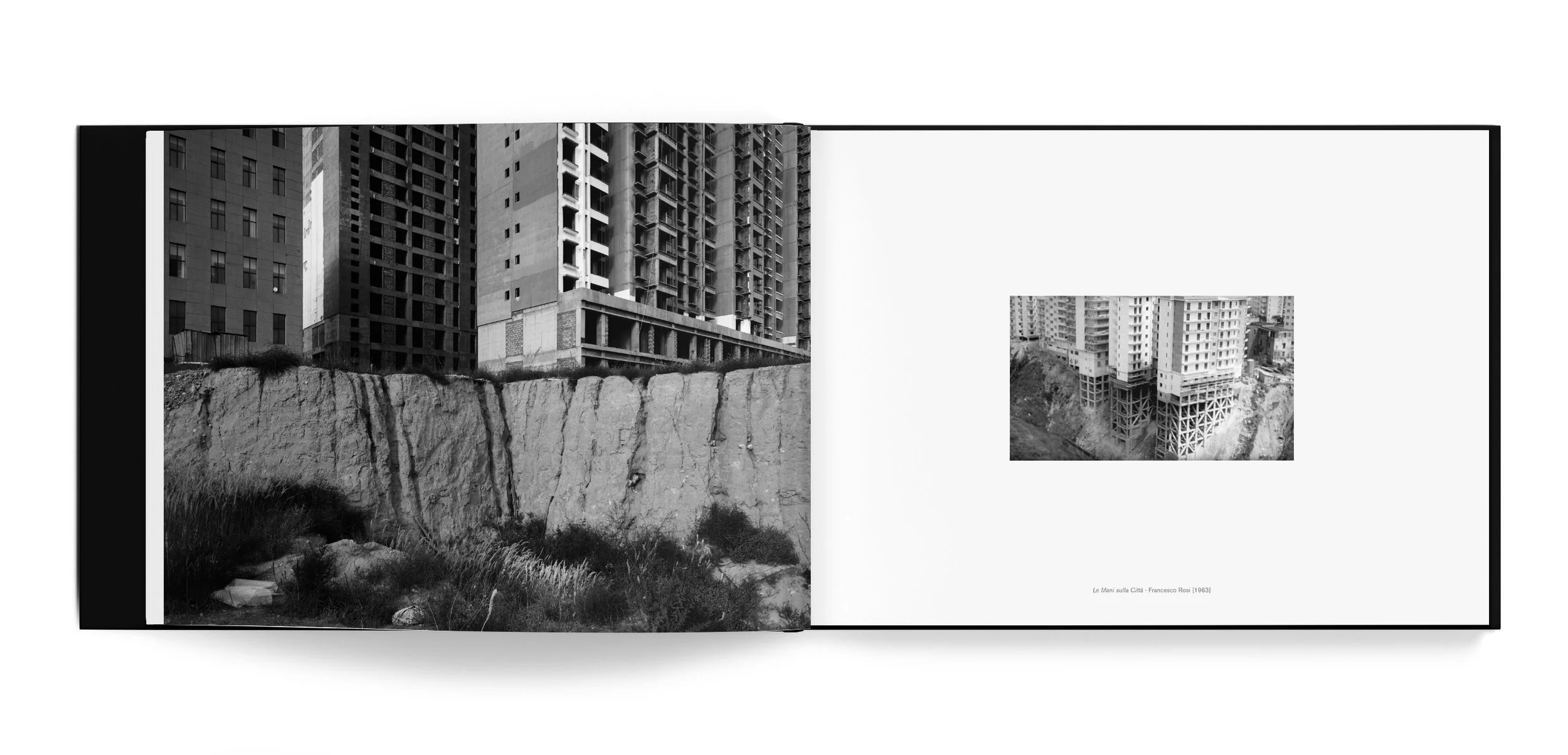
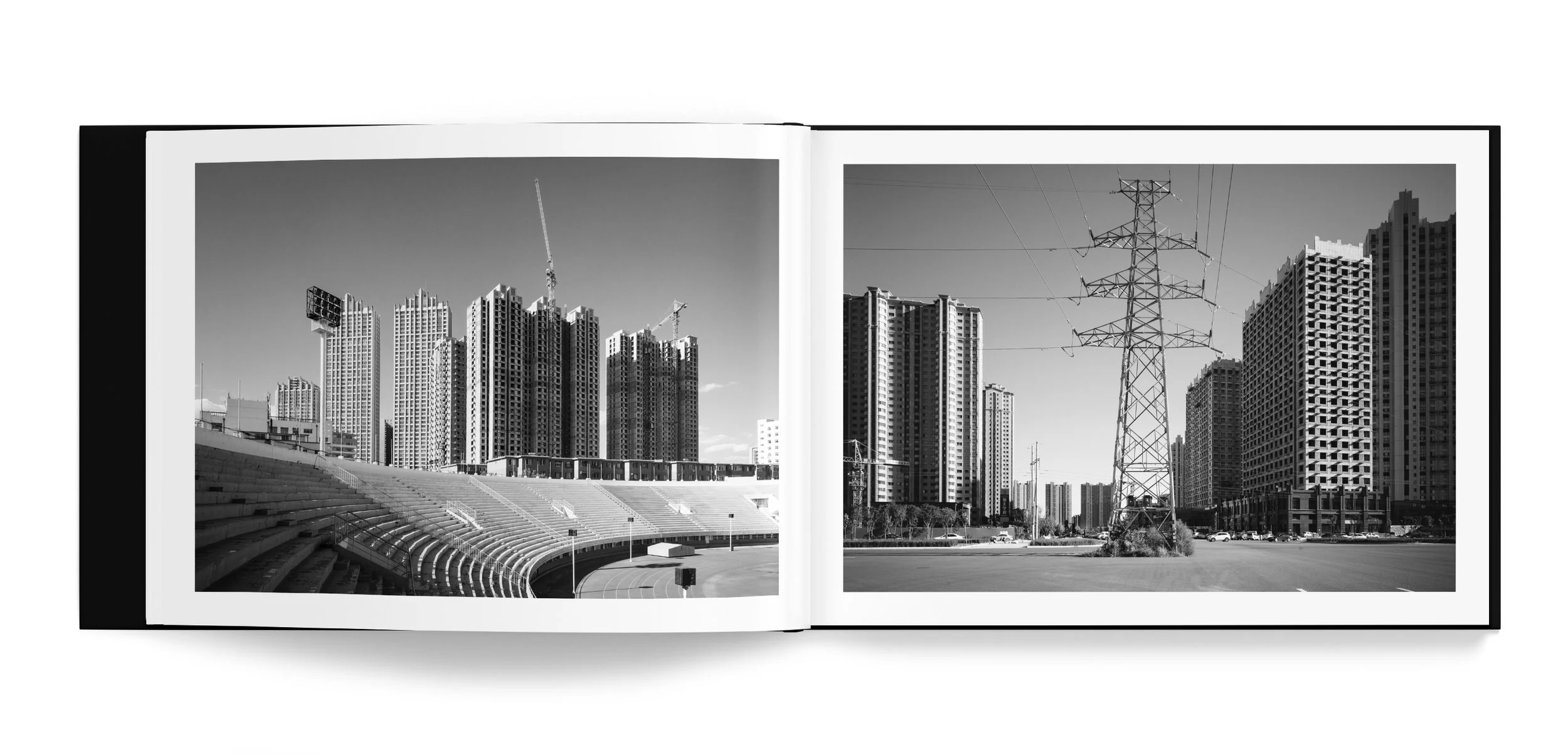
In the late summer of 2016, I spent six weeks in the Inner Mongolia Autonomous Region, documenting the transformation of major cities such as Ordos, Hohhot and Baotou. During this period, the work developed in parallel with a visual and conceptual dialogue with Italian cinema of the 1960s and 1970s, whose sequences are directly interwoven with the photographic material in the structure of the book. The project later became The Post-War Dream, published by Urbanautica Institute in November 2018.
The unexpected proximity between these two visual corpora, produced across different geographies and historical moments, points to a broader condition in which urban development assumes increasingly standardised and recognisable forms. The comparison does not operate as a simple reference, but as a structural device through which images are placed in relation, revealing recurring patterns in the way contemporary settlements are conceived and built.
Across different scales, the notion of habitat appears progressively homogenised. What emerges is a landscape shaped by accelerated processes of construction, often anticipating future needs rather than responding to existing ones. Large residential complexes, sometimes only partially inhabited, suggest a model of urbanisation driven by projection and replication, where human presence becomes secondary to the system that contains it.
The project reflects on how contemporary urban growth redefines both the physical environment and its perception, questioning whether alternative images of the city can still emerge beyond the dominant narratives of expansion, density, and planned emptiness.