Dust Never Sleeps
SHANGHAI, CHINA — 2015 / PHOTOGRAPHIC SERIES DEVELOPED IN SHANGHAI, CHINA
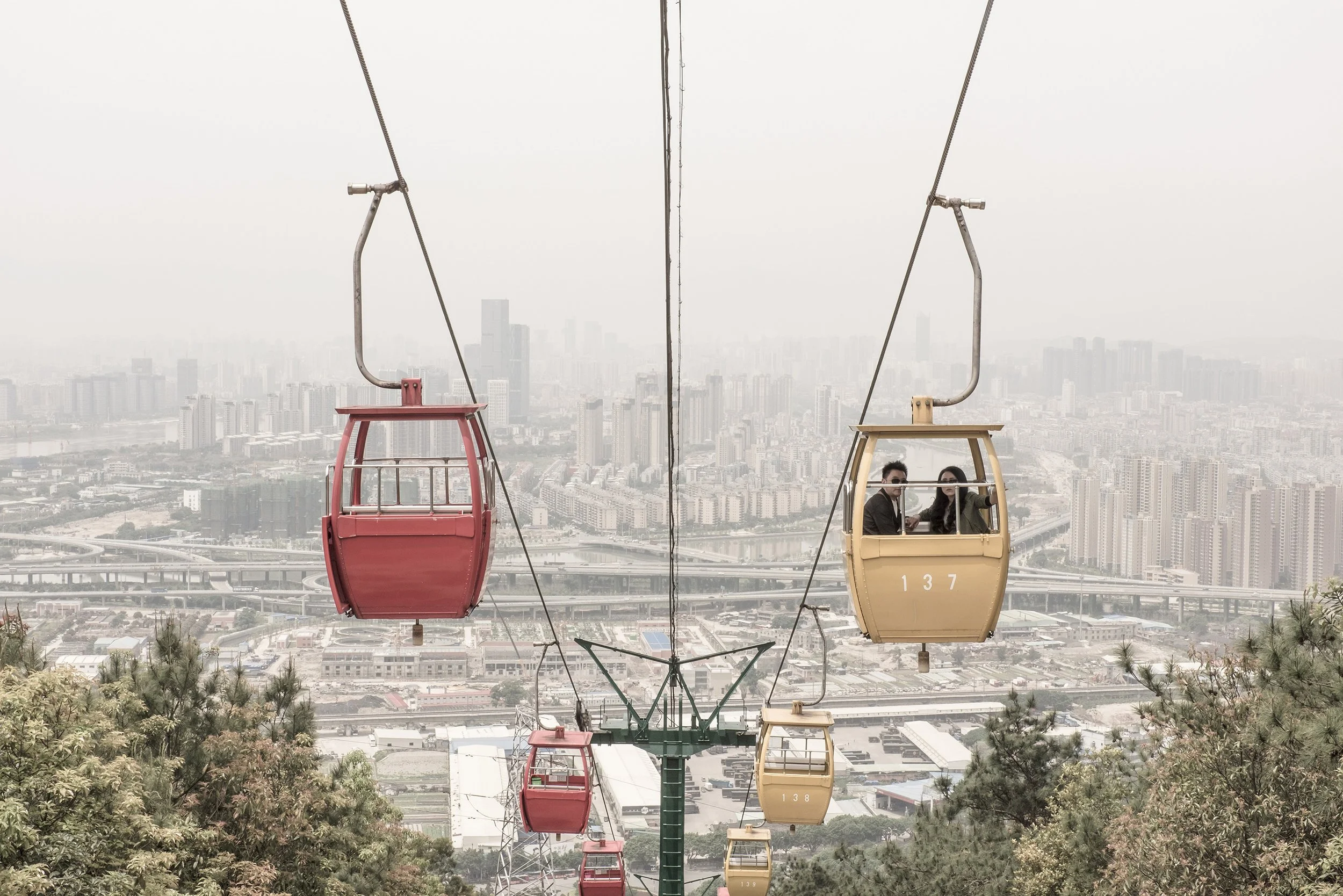
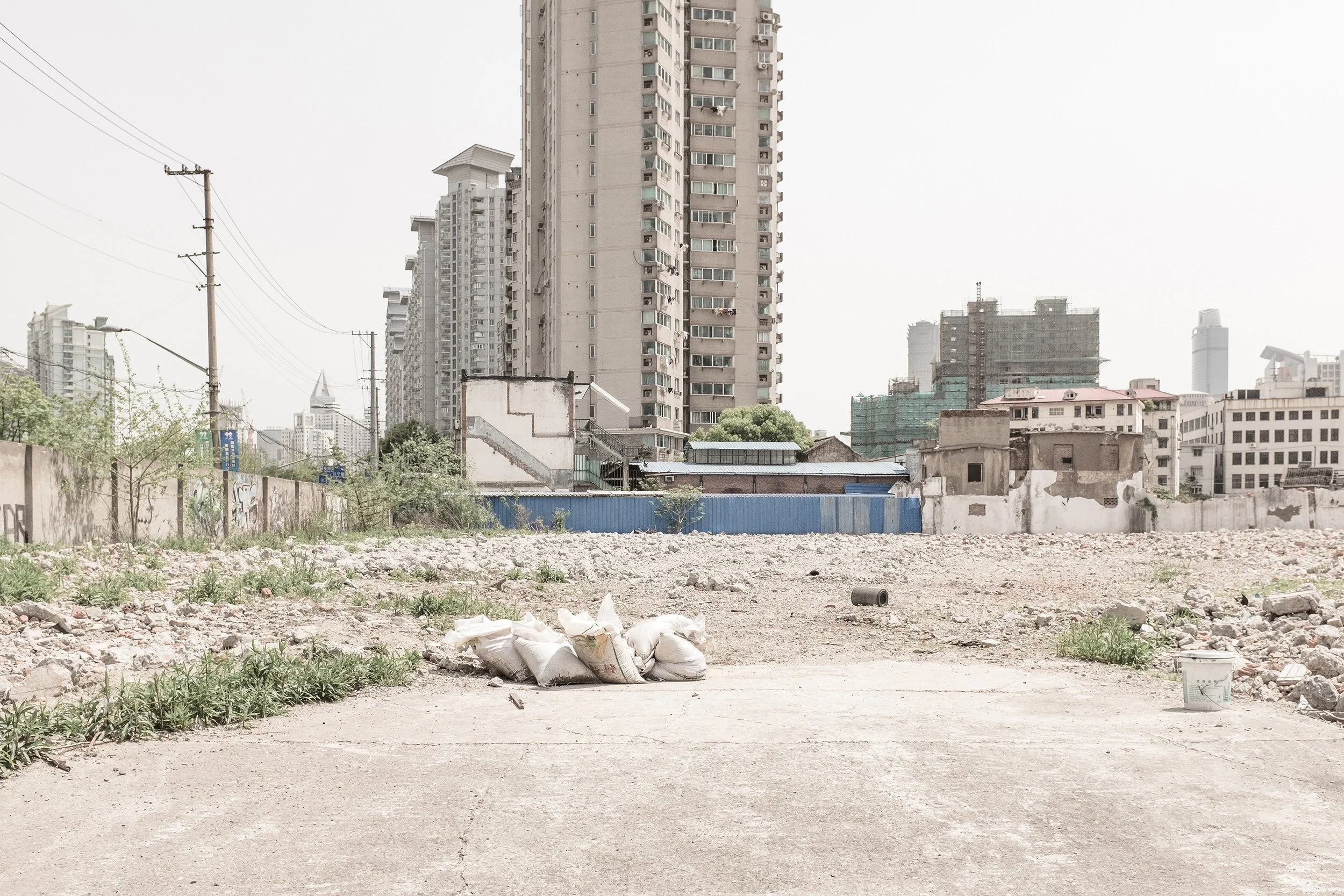
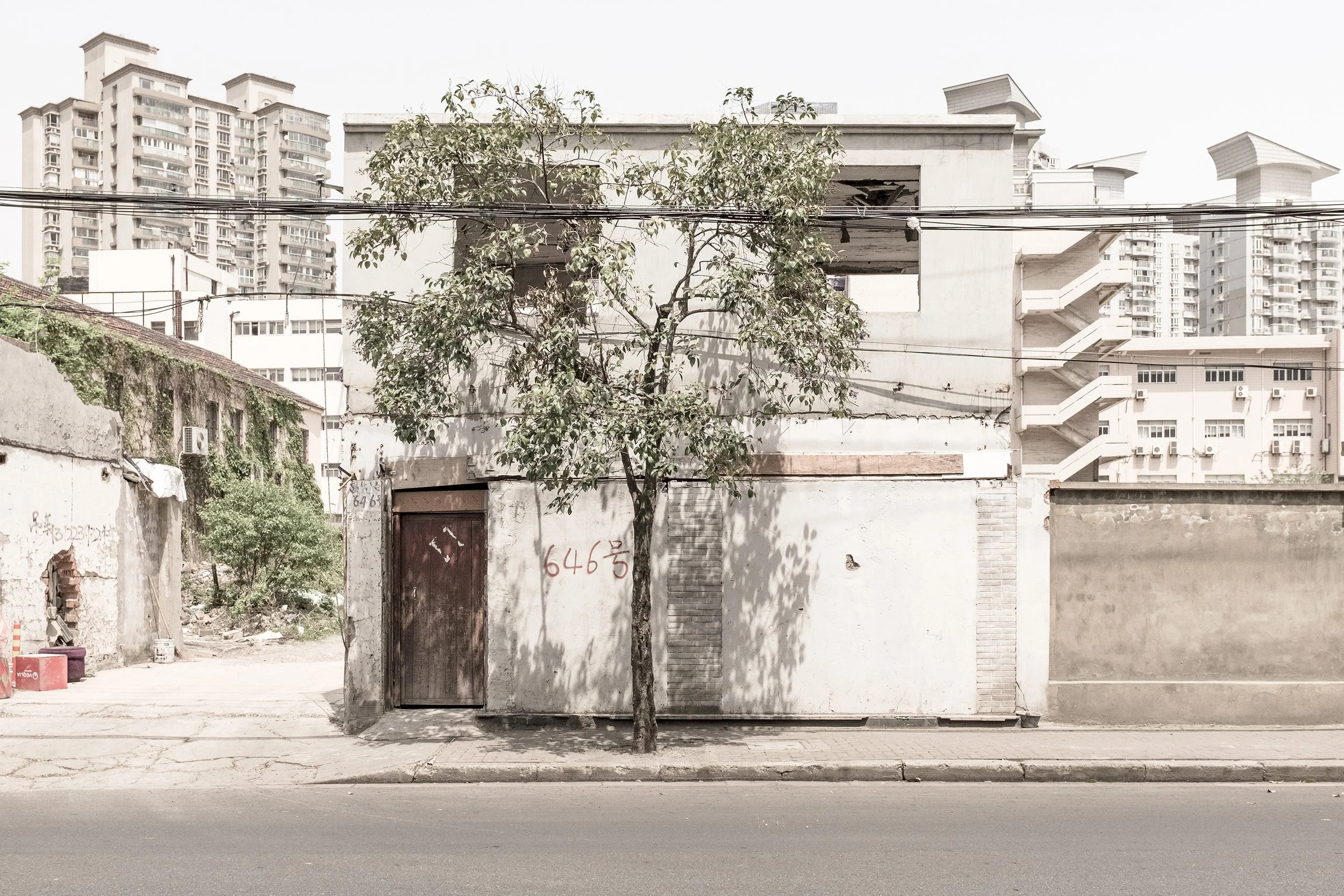
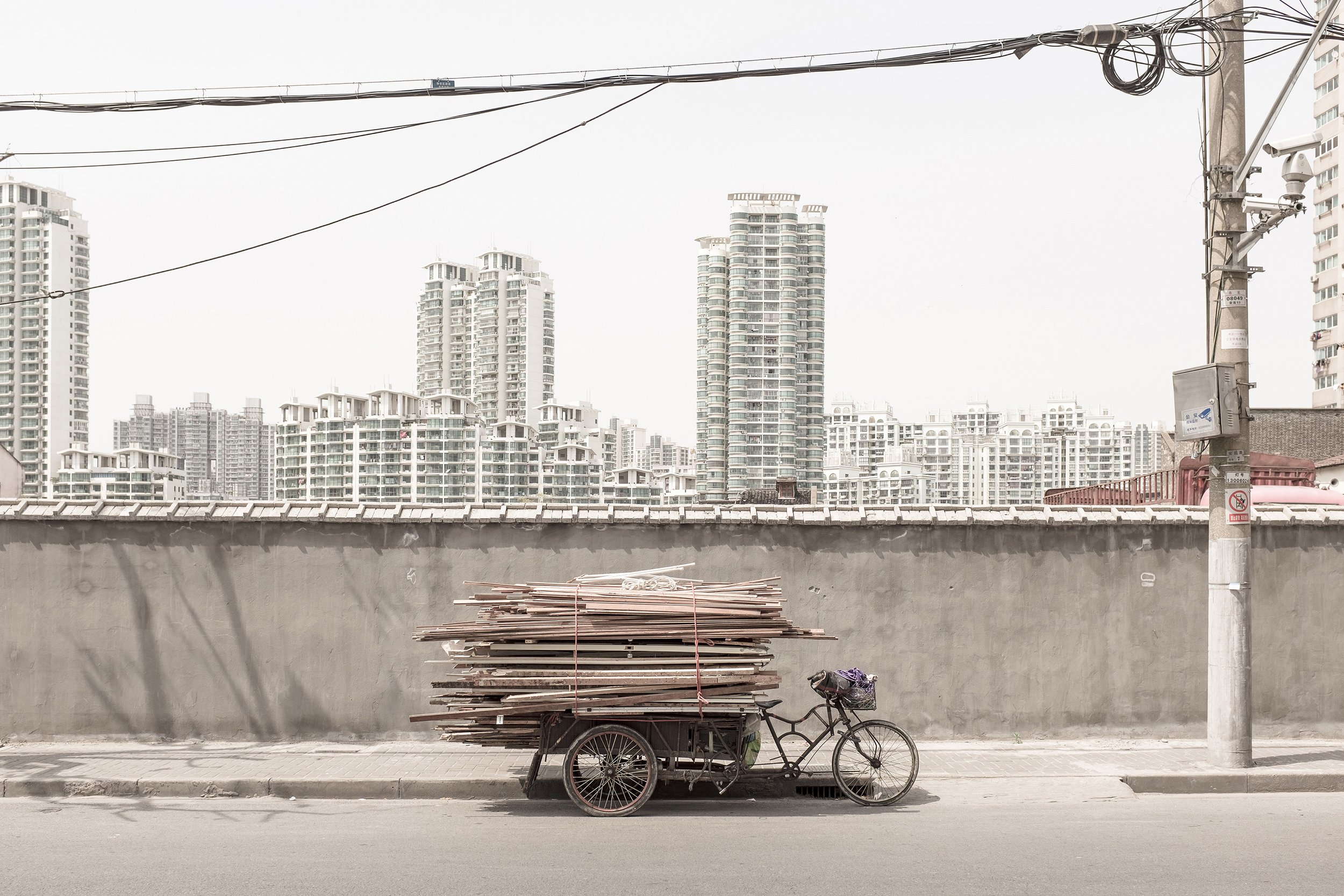
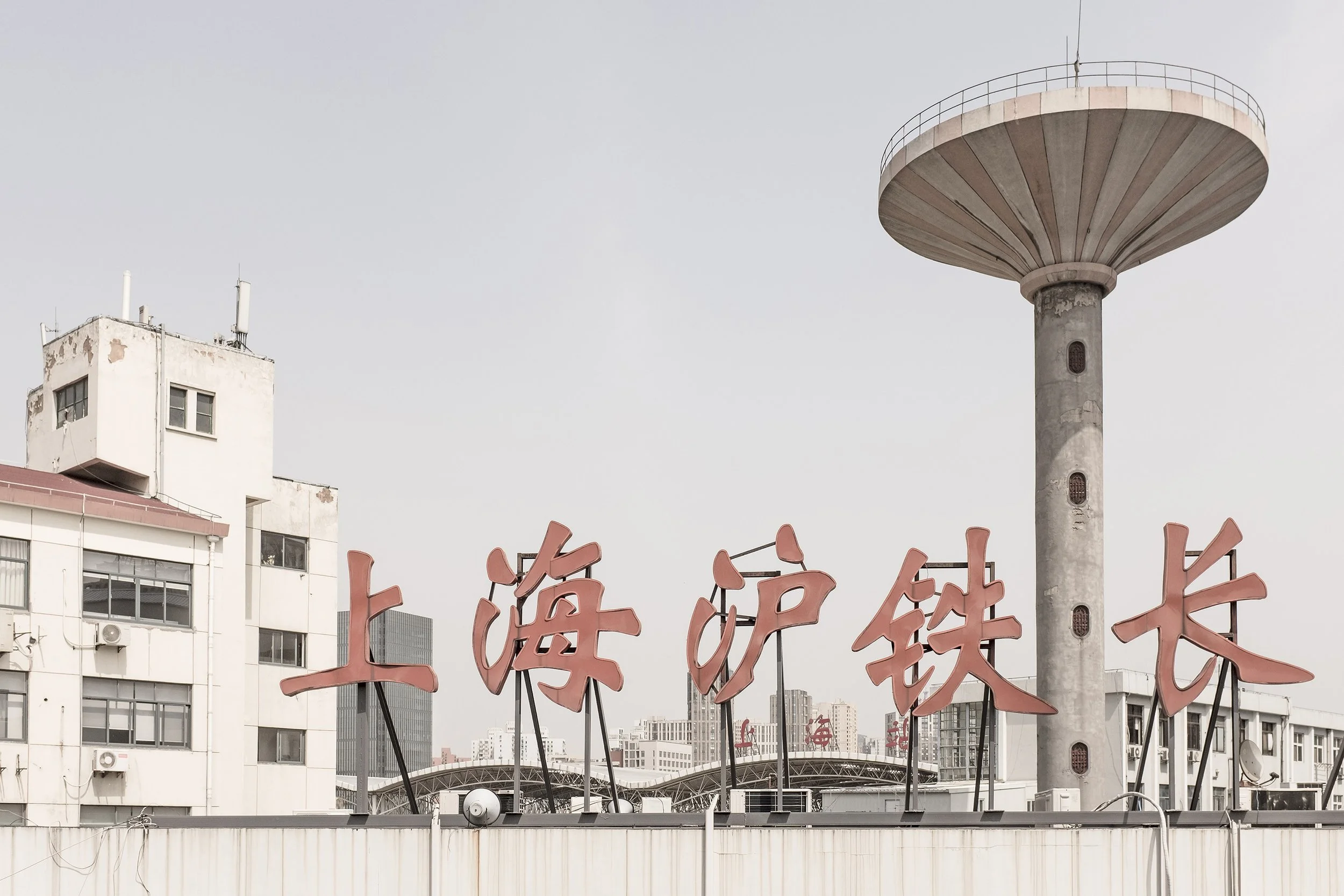
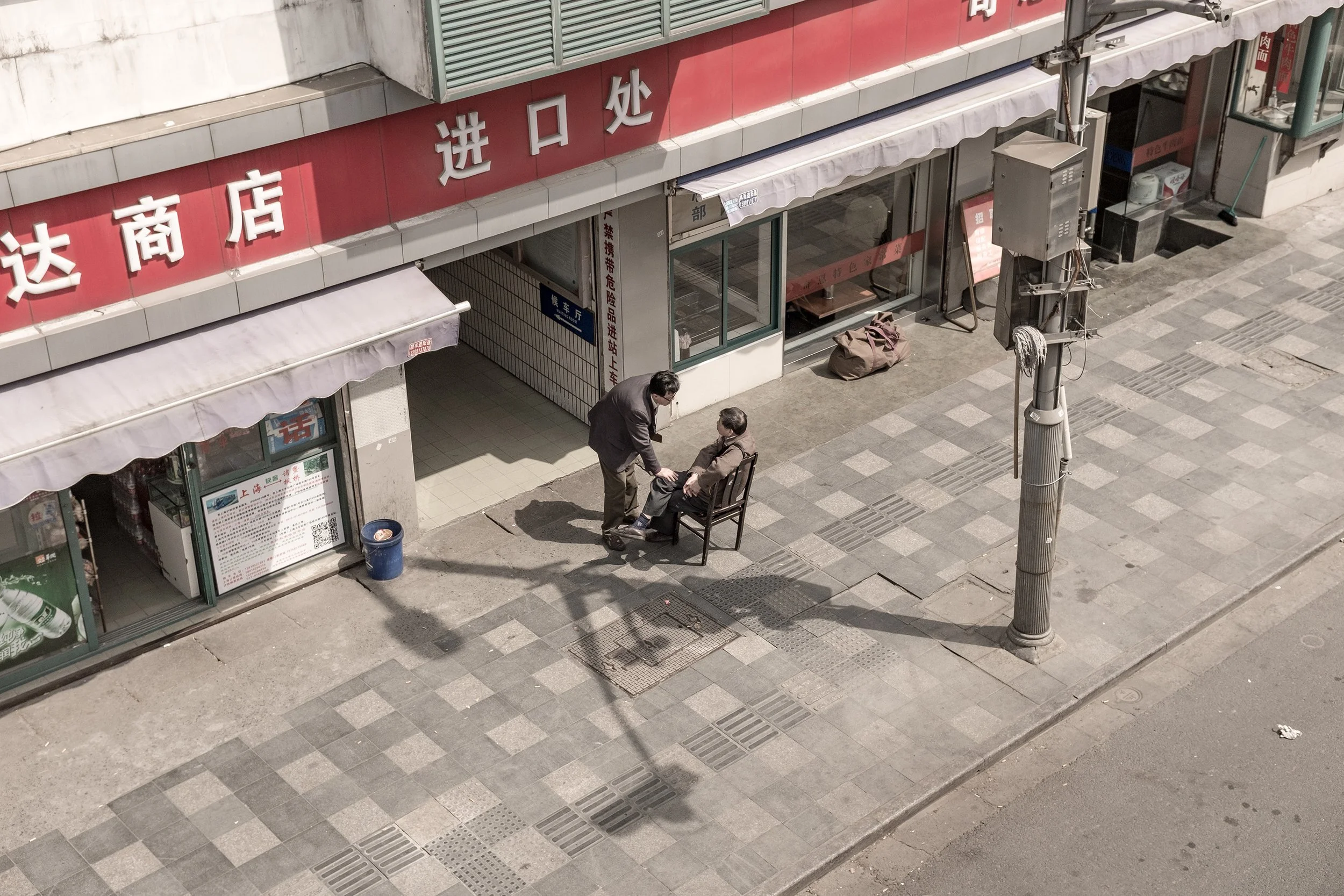
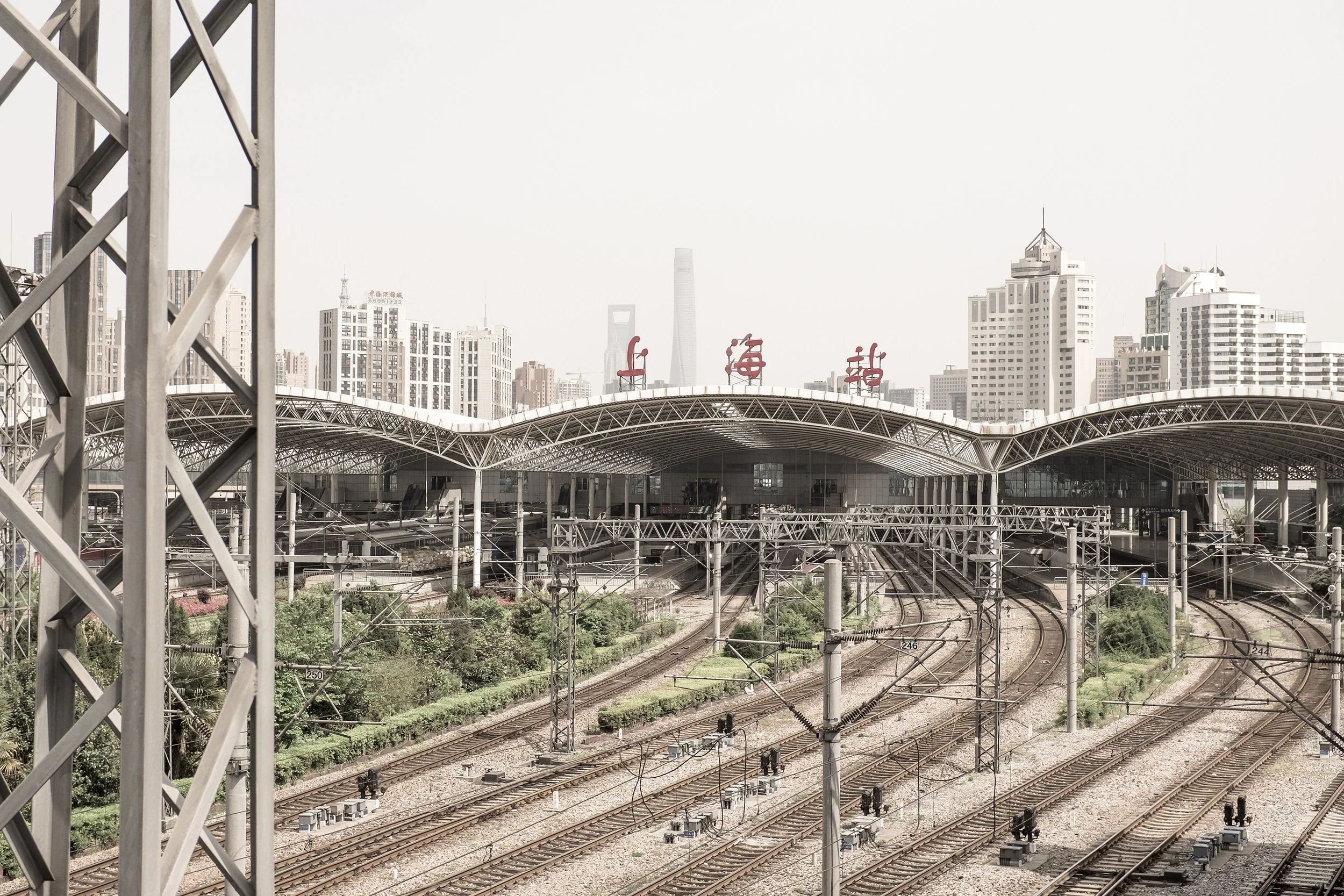
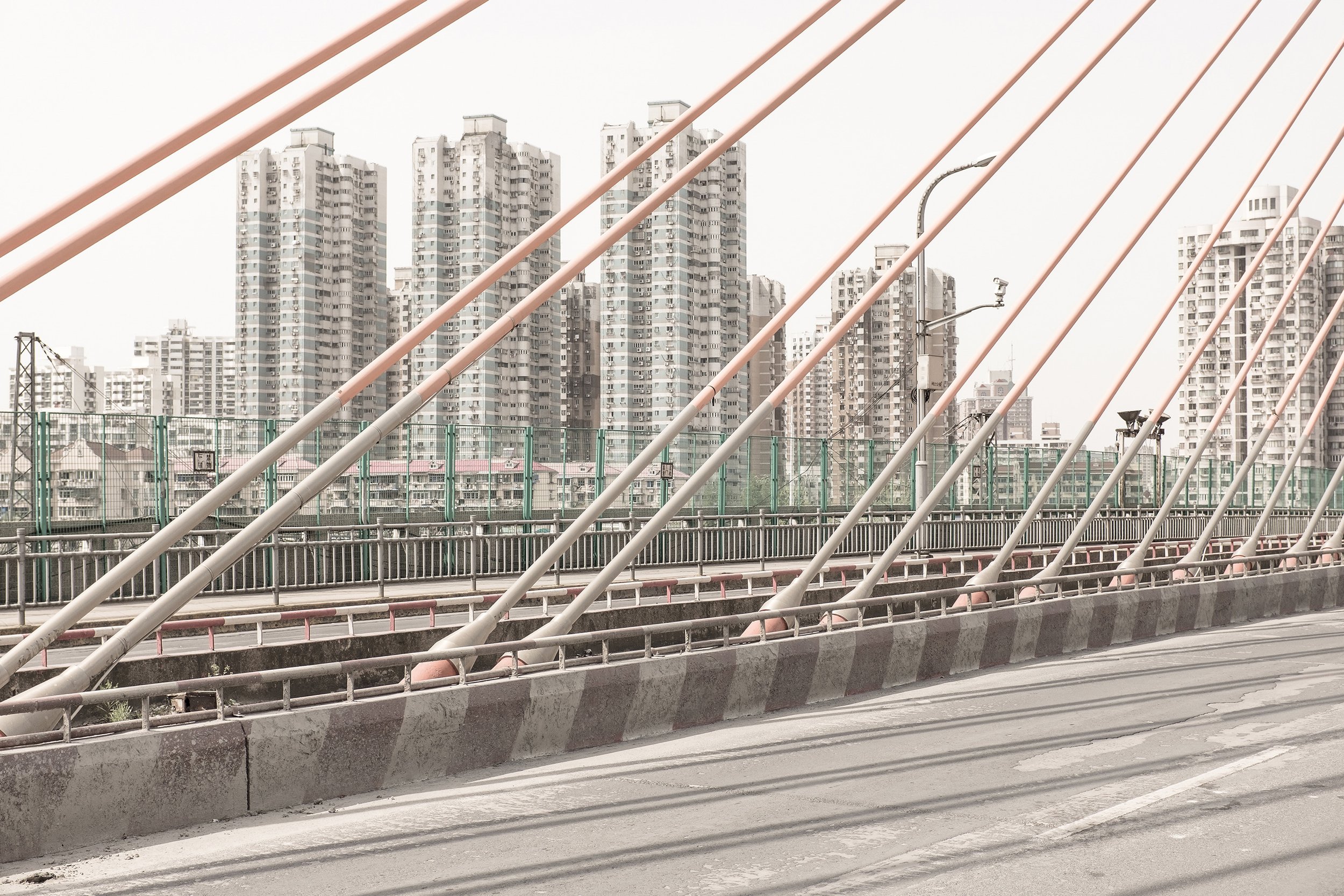
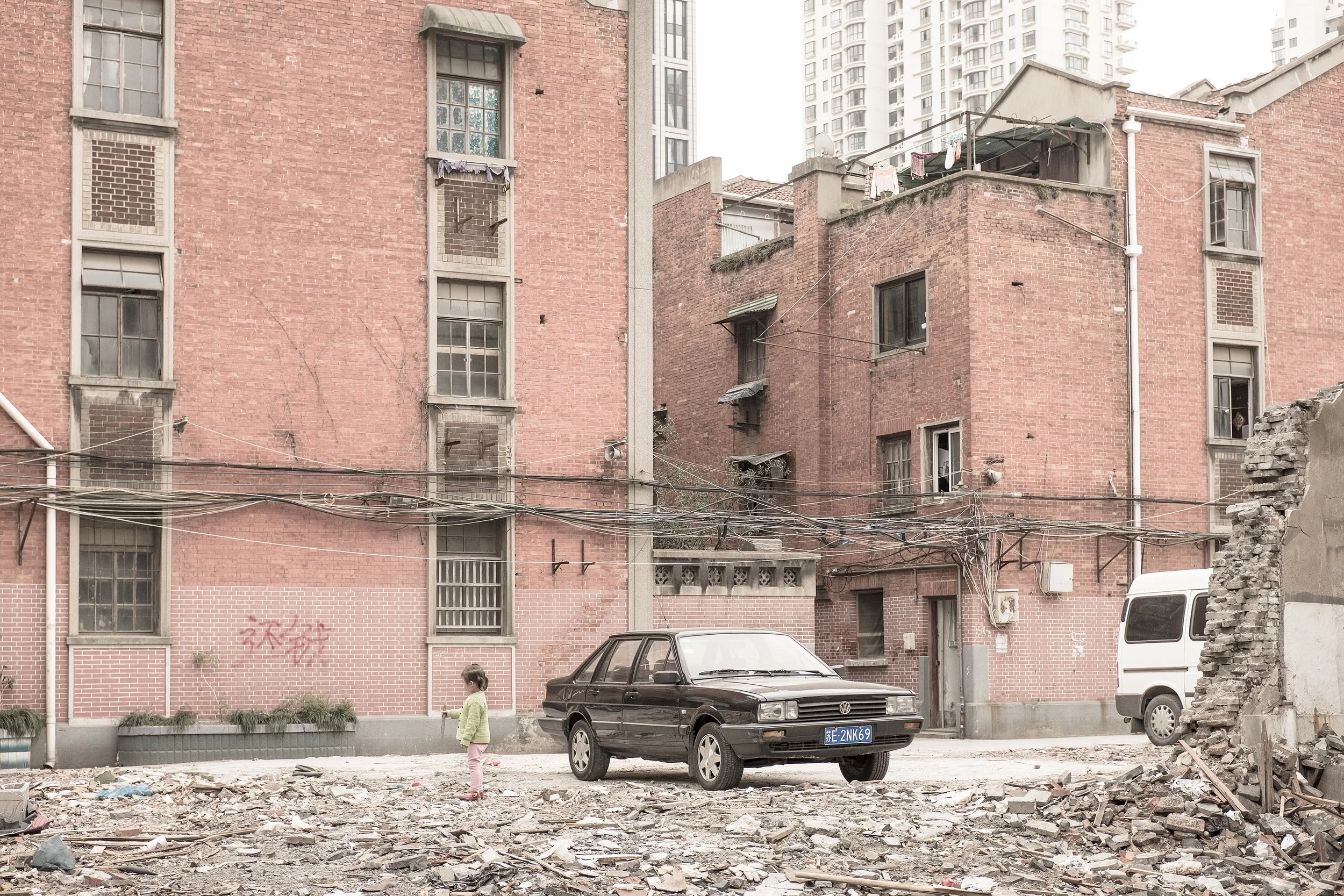
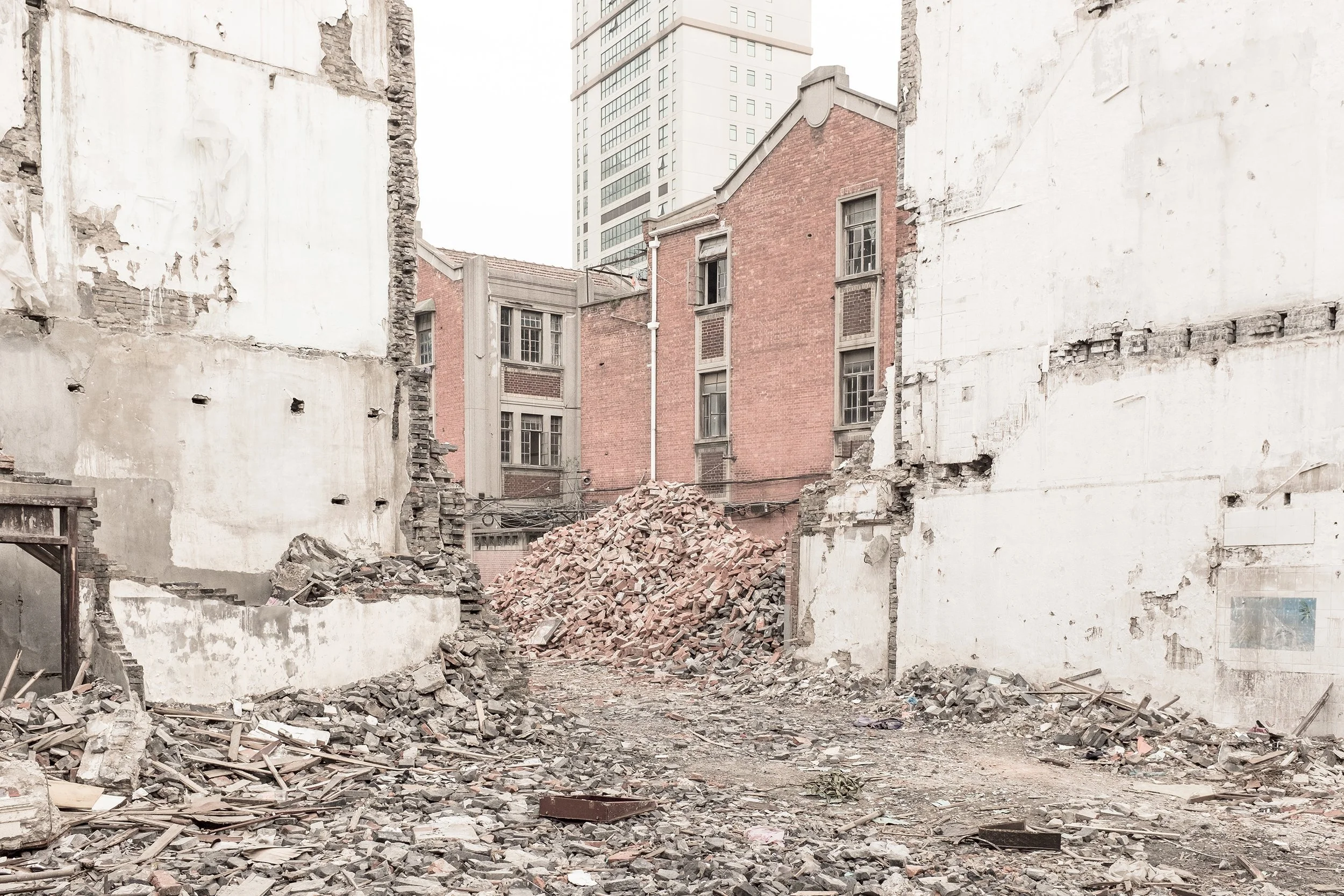
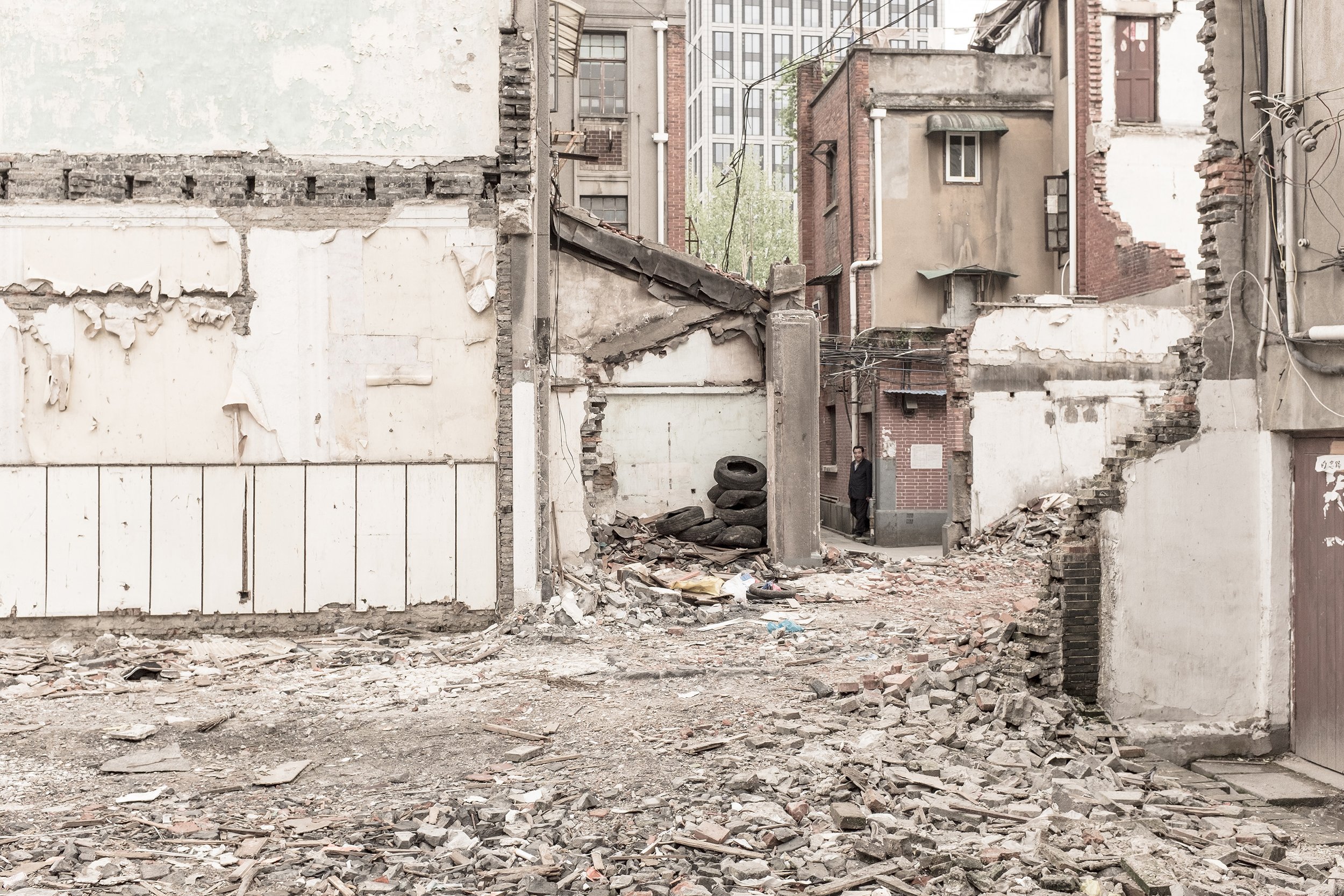
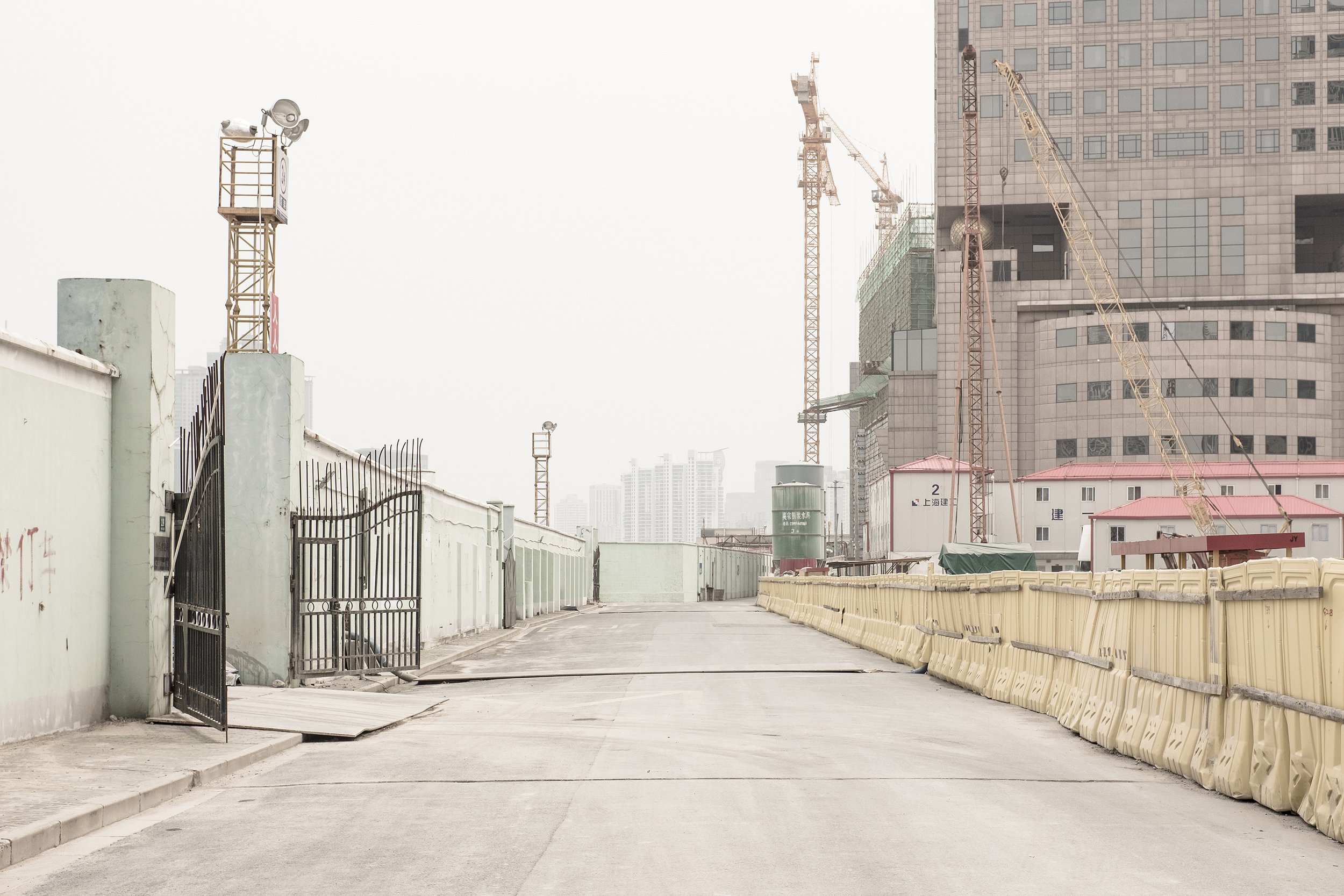
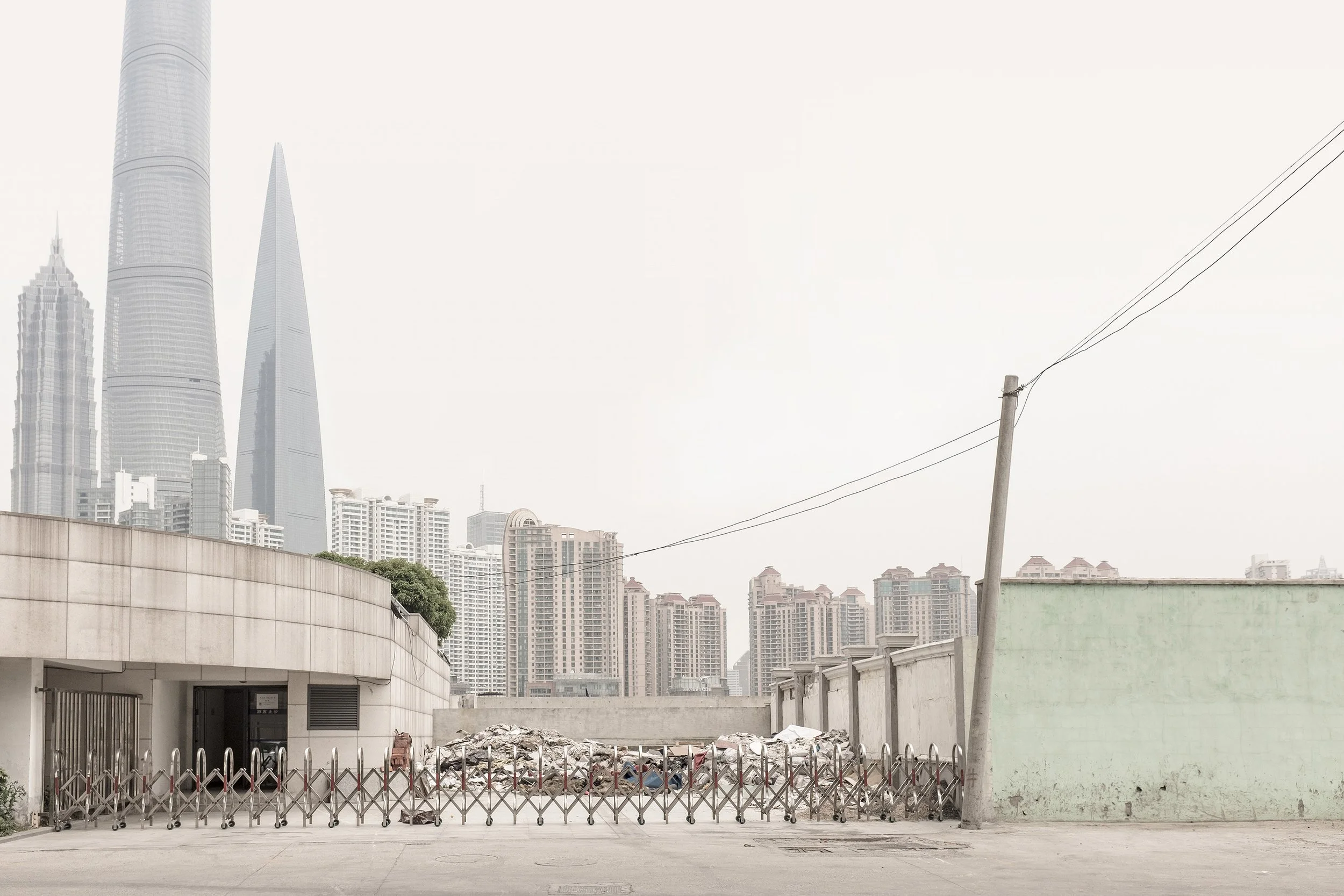
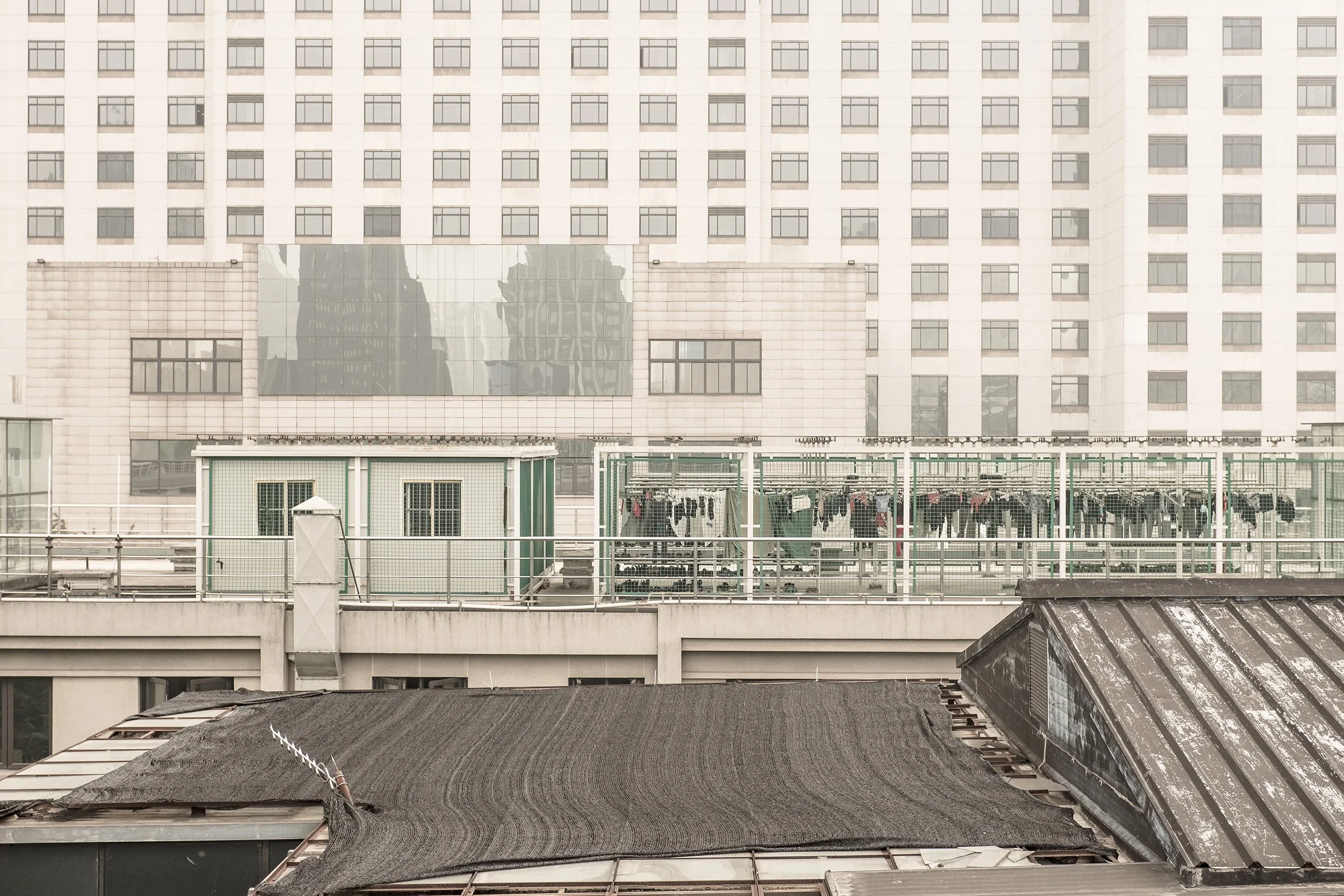
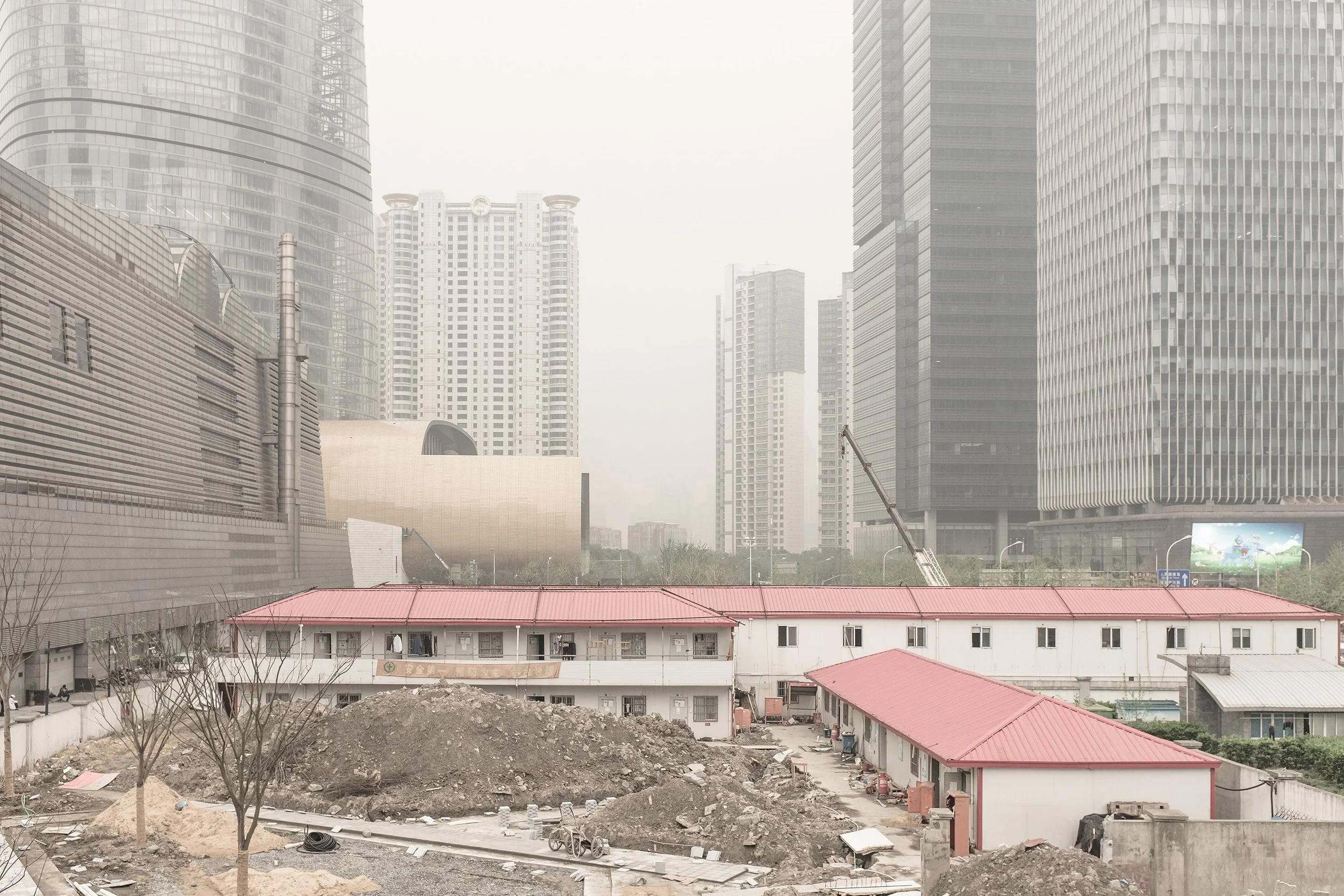
A journey, proving clear-minded and oneiric at the same time, through the stillness of an apparently endless urban space, always different yet similar to itself everywhere, in its consistent search for a design within that geometry – lines, shapes, surfaces and volumes – that is key to the representation and interpretation of the world. A Shanghai whose landscape disorder is exalted from the point of view of its uncontrolled growth, yet fixed permanently in its being and becoming, and recomposed in subsequent frames in which the presence of man is occasionally slightly ironic, witness to a relentlessly shifting present.
The formal consistency of the enhanced white in all images combines the milky haze of an Asian sky and of colorless architecture with the impalpability of a perennial construction site’s chalk dust, suspended in the air or else deposited on the urban matter itself. A ubiquitous white making the landscape uniform while investigating it from a certain distance, incorporating and defining the whole urban scene.
The distance created by the framing echoes the photographer’s own detachment, belonging to the New Topographics School, neither pursuing nor reproducing absolute beauty. A will to read and tell, instead, on the threshold between personal vision and objective narration of reality. The crowd is totally absent in an environment where it would be primary, in a solitude that becomes human isolation within the vast dimension of places.
A solitude engulfing but recomposed in a tangible though estranging reality: paying tribute to an Italian Master of photography, it may be said to be the quest for Ghirri’s “impossible image”, an “image showing the static character of painting on the one hand, and the dynamic quality of cinema on the other”, owing also to “a presence of the photograph and an absence of man”.
Not answers, thus, but questions about reality, an untiring investigation aiming at the construction of a unitary whole, the sum of looks at single urban corners symbolizing that very whole: the city. Not an Ideal City, as in Piero della Francesca, but a city proving to be real even in its oneiric dimension. A half-deserted city, with a few occasional exceptions to the absolute human void of Gabriele Basilico’s architectural rigor: the very exception to that void is meant to lead – and does lead – back inside the world.
Claudia Ioan e Massimiliano Tuveri
Officine Creative Italiane